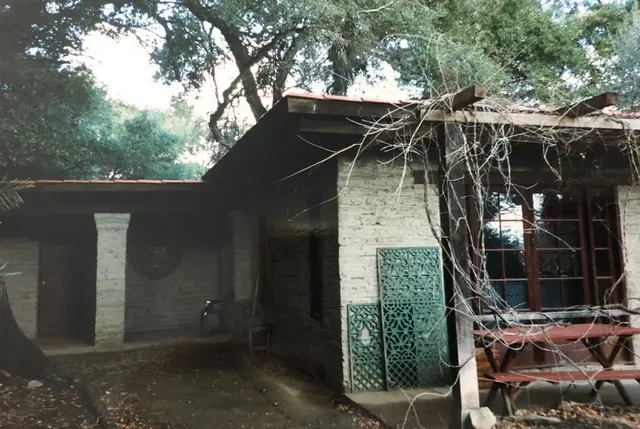
Many thanks to Janice Cipriani-Willis for inviting me to write a few paragraphs about my time at Dorland back in February 1999.
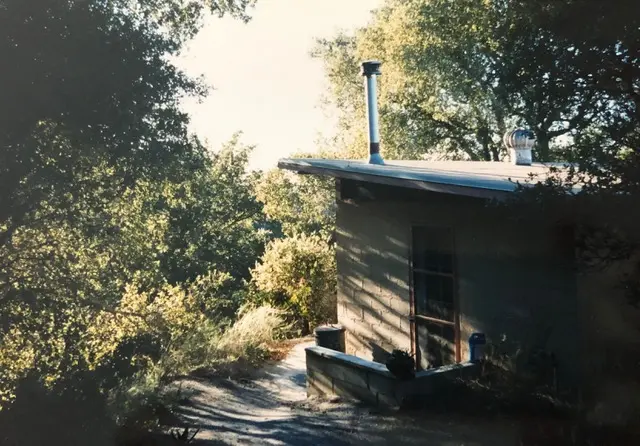
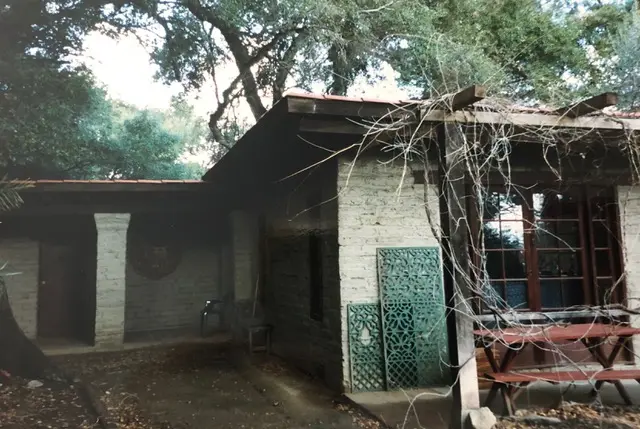
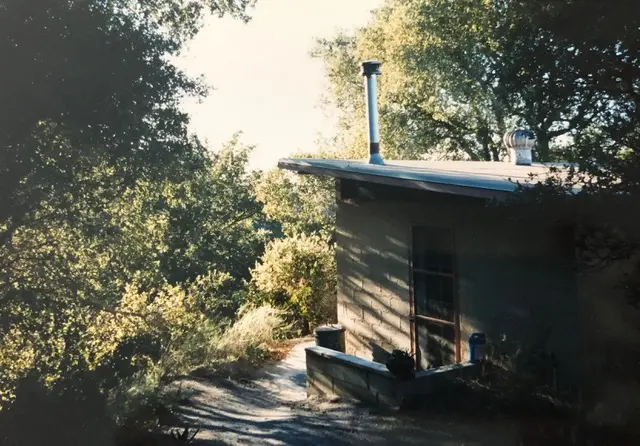
I was last a resident at Dorland in February 1999, in Composers Cabin
for three and a half memorable weeks. Very sadly, the entire colony
burned to ash in the May 2004 Eagle Fire, and part of me has feared
that the transformative magic I felt while there might have burned
away with it. Re-reading the journal I kept while in residence, my
experiences felt as fresh as if they’d happened a week ago. I’d taken
many photos and written abundantly about my days and nights there,
most of them spent alone with my thoughts, feelings, memories, the
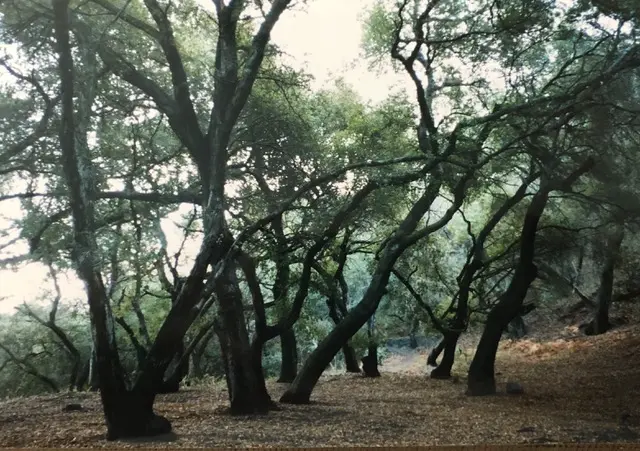
words of others, bird calls and wildlife sightings, live oaks, stars, and
on walks along Dorland’s sage-fragrant trails. I later did two more
residencies at “fancier” retreats, but none has compared to Dorland as
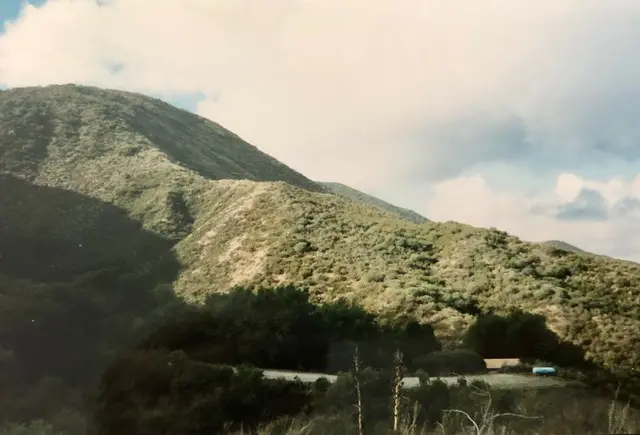
it was in 1999: its rustic beauty, deep silence, Native presence, bobcat
and deer scat on the trails, the reeds and cattails at Lake Ticañu,
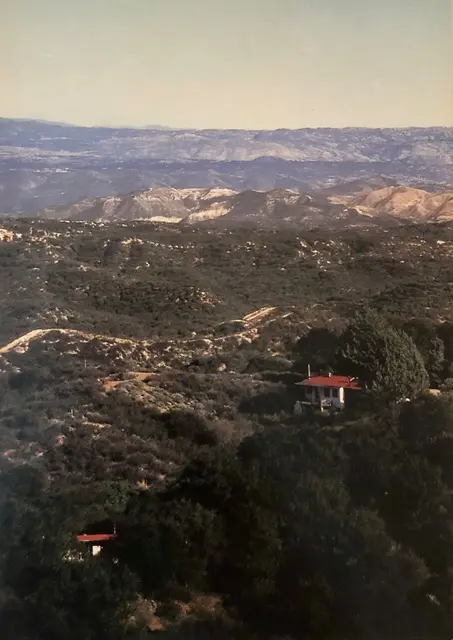
scudding clouds and sweeping opalescent sunsets over the Temecula
Valley. I have held these memories like burnished treasures over these
26 years, and they still nourish me.
When family friends in San Diego dropped me off at Dorland, I was a
37-year-old mixed-Japanese poet with a graduate degree and a few
published poems to my name, but no book. I was just back from six
weeks in Japan to visit my family there, and was single, homeless,
jobless, and carless. Four years prior, while studying poetry as a
graduate student at New York University, my mother who lived far
away had suddenly gone missing in a still-unresolved disappearance —
an event that is the central theme of my poetry collection The
Darkened Temple (2008 University of Nebraska Press). Saddled with
family responsibilities while navigating my confusion and grief, I felt
fragmented, unmoored, and creatively paralyzed. While living and
working in New York City, I learned about Dorland, and immediately
applied. It turned out to be the best thing that could have happened
for me at the time.
In 1999 Dorland had no electricity or Wi-Fi, so nature’s rhythms
determined how I spent my time. My daytime routine included
cleaning my cabin and gathering kindling for the woodstove, walking
up to the Adobe to borrow books from the library, checking the mail,
hiking Far Springs and Bee Canyon Trails, sitting quietly in the twilit
oak grove, gazing out at the high desert from Eastern Lookout (now
called Sunrise Point) or Sunset Point, reading and writing and napping
or playing the baby grand piano in my cabin. At night I prepared
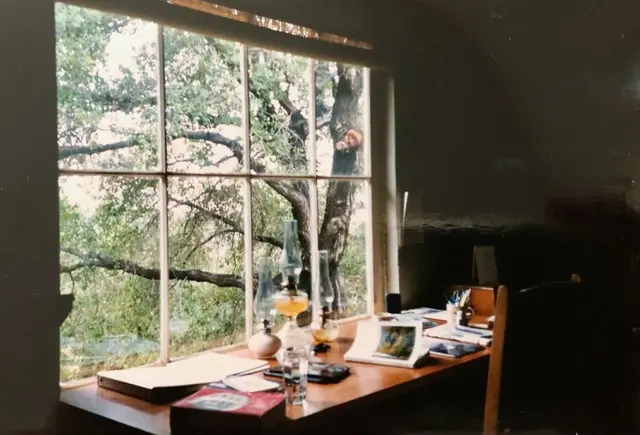
simple meals on a propane-fueled stove, drank wine and read by the
light of kerosene lamps. After I’d gone to bed I’d sometimes listen to
my transistor radio for the comfort of hearing a human voice. Mostly I
surrendered to the silence, which was deep and immersive, broken
only by the sounds of insects and coyotes yipping in nearby Lupine
Canyon. The silence normalized and grounded me in my own state of
wordlessness and internal disarray. As I didn’t have a car for an easy
escape, I had little choice but to be with myself, in all my feelings and
states of being. This proved to be a necessary, and fruitful, aspect of
my residency.
From my first journal entry, dated February 4, 1999, two days after
my arrival:
Rain pelting down endlessly. The oaks, the sage, the ground soaked
through. Hours I’ve sat at this table, staring out, rising to stir the fire
in the wood stove, putter in the kitchen, write letters… still no words
come. Still I make no attempt to put pen to paper in any serious way…
I alternately berate and forgive myself. I’m back from Japan just over
a week now. So many details to tend to before coming to Dorland.
Jetlag. Culture shock. Fatigue, anxiety… The oaks know better. Their
brittle leaves are glistening with rain, their gnarled branches nod in the
wind. The rain comes down in silver ropes... the sky is grey and
sullen...
Last night, coyotes yelping from what sounded like steps from my
door. Unnerving. Couldn’t sleep again for a couple of hours. The lights
from the valley create a glow…
The view from my desk: two large live oaks, one on either side, and
out beyond, a rising wall of green capped by a sloping, chaparral-
covered ridge. Between me and the ridge is Lupine Canyon. Must be
amazing to see it abloom in the spring.
The other residents here: Tina (a painter), Katherine/Kathryn (a visual
artist), and Richard (a composer). Then there’s resident caretaker
Robert Willis [whose gentle kindness meant so much to me then… I
remember him with great fondness], and Lika, the colony dog. Karen
and Vince.
One is very much left alone here. The solitude and silence are all-
enveloping. One submerges into it, like water, coming up for air (and
human contact) now and again. It’s the first solid stretch of quiet and
alone time I’ve had in weeks and weeks, perhaps months. Even alone
in my Brooklyn apartment, I had to contend with street noise at all
hours. Here, I hear only the rain, the wind, the wingbeat of startled
birds, the wail of coyotes, and occasionally the sound of distant traffic
out on the highway or a plane passing overhead…
… I found a notebook on a shelf with entries by previous occupants of
this cabin, dating from 1993. It moved me to tears to read how others
have come before me to this place and felt just as uncertain about
what work they were to accomplish while here, both inner and outer…
I think my long silence has made the pressure to produce while here
that much greater. My expectations are high.
Who knows, perhaps all that I’ll “accomplish” is a renewed sense of
self, some peace of mind, and a lot of reading and dreaming and
scribbling. Perhaps I won’t write a single poem. Is this ok? It’ll have to
be…
My brief time at Dorland was life changing — an emotional and
spiritual reset, a necessary transitional space. By the time I left on
February 27, I’d drafted three poems, none of which was ever
published, and filled my journal, read several books (western writers
Gary Snyder and Wallace Stegner among them), browsed others, took
copious notes, thought and felt and dreamed. But my real work at
Dorland was to reconnect with myself, in mind and body — to connect
with the land and its deep history, with other resident artists and their
creative ideas and process, and to remind myself that I and my work
have value. The nourishment and support I received at Dorland
enabled me to eventually write the poems that completed my first full-
length poetry manuscript. Thank you, Dorland, for being the temenos
that I needed at a critical time in my life. Perhaps one day I’ll make
my way back to you.
Mari L’Esperance
June 18, 2025
Pasadena